Inventory Allocation in the Age of Agentic AI Supply Chains
Paul Taylor||
Agentic AI is moving supply chain optimization from theory to practical execution. In this article, Paul Taylor explains how inventory allocation agents help organizations prioritize limited stock based on customer value, order urgency, service commitments, and operational risk.
Paul Taylor
Senior Solutions Architect | F&O
Follow Me:
Table of Contents
SHARE
SHARE
What's in the article:
Key Takeaways
Inventory allocation agents help supply chain teams prioritize limited stock based on customer value, service commitments, order urgency, and operational risk.
The strongest use cases start with a real allocation pain point, not a broad AI transformation agenda.
AI can improve allocation decisions only when the ERP, warehouse, order, and customer data foundations are reliable.
Human judgment still matters, especially when two priority customers compete for the same limited inventory.
The best measure of success is practical business impact: fewer allocation exceptions, faster order decisions, better priority fulfillment, and stronger customer retention.
Ask me how many supply chains still treat every customer the same when inventory runs tight, and I’ll tell you it’s more than you’d think. Demand swings wildly, suppliers miss commitments, and customer expectations keep climbing—yet many organizations still rely on static allocation rules that ignore a fundamental truth: not all customers carry the same value, urgency, or downstream impact for the business.
To me, inventory allocation is where supply chain AI becomes practical. It is not a theoretical exercise or a science project. It is a focused way to protect revenue, preserve customer trust, and give planners back the time they lose to constant exception management.
One-Size-Fits-All Inventory Management No Longer Works
Traditional inventory models assume uniform service across all customers. Safety stock gets set at the product level, replenishment follows fixed rules, and allocation decisions run first come, first served. While this might feel fair, it ignores what really matters: customer value, margin contribution, and strategic importance.
Here’s the problem I see often in supply chains: lead times fluctuate, suppliers miss dates, and demand shifts faster than planning cycles can keep up. When you’re short on inventory—which happens more than anyone wants to admit—rigid allocation rules break down fast. Strategic customers experience delays while routine orders consume available stock.
Modern supply chains need flexible inventory allocation software that reflects customer importance, margin impact, contractual promises, and service commitments rather than relying on historical averages or static reorder points. In plain terms, we need to bring inventory allocation into the 21st century.
The right answer is not always to reserve earlier or later. It depends on how the business ships, which customers need protection, which orders are future dated, and where limited inventory can create the most value. Some companies reserve right away because they ship quickly. Others wait so they can protect priority customers or avoid tying up stock too soon.
Inventory Allocation is a Customer Experience Strategy
Most people frame inventory prioritization as an operational decision. I see it differently. Inventory allocation is a customer experience strategy. Customers do not measure service in internal fill-rate percentages; they measure it by whether you delivered what you promised, when you promised it.
Strategic inventory allocation optimization helps you meet differentiated service expectations without forcing your team to debate each exception manually. High-value customers expect higher service levels, shorter lead times, and proactive communication. By segmenting customers and aligning inventory policies accordingly, you can consistently meet those expectations instead of reacting after a promise has already been missed.
This is also where the human side matters. The goal is not to remove planners from the process. It is to remove the noise around the process. When an inventory allocation agent handles the constant monitoring, prioritization, and rebalancing, planners can focus on judgment calls, customer conversations, and strategic tradeoffs.
Turning Prioritization into a Scalable Capability
Effective inventory prioritization requires more than tribal knowledge or manual overrides. It depends on clean segmentation, clear service policies, accurate inventory visibility, and enough discipline to decide in advance how the business should behave when supply gets constrained.
Those rules should not live only in one planner’s head or get sorted out during every exception call. They need to reflect leadership decisions about customer commitments, service levels, margin, operational risk, and when it makes sense to move inventory from one order or transfer to another.
This is why I always come back to foundations. Supply chain AI only works when it is grounded in the business rules, data, and operational reality of the company using it. If those foundations are weak, the agent simply automates confusion faster.
When the foundation is in place, prioritization becomes proactive rather than reactive. You can define customer segments using factors like revenue contribution, margin, contractual obligations, project priority, or growth potential. Then you align inventory rules to those segments. The result is consistent, transparent, and repeatable inventory allocation—no more scrambling to figure out who gets what when supply runs short.
Over time, this approach builds real operational resilience. Instead of firefighting during every disruption, you operate with predefined guardrails that guide decisions under pressure. Inventory stops being a constant source of tension and starts functioning as the strategic asset it should be.
That’s where Velosio’s AI agent comes in.
Inside the Inventory Reservation Agent
We built the Inventory Reservation Agent to address a very specific gap in Microsoft Dynamics 365 Supply Chain Management and its inventory optimization capabilities: when supply is limited, high-value or high-priority customers do not automatically come first.
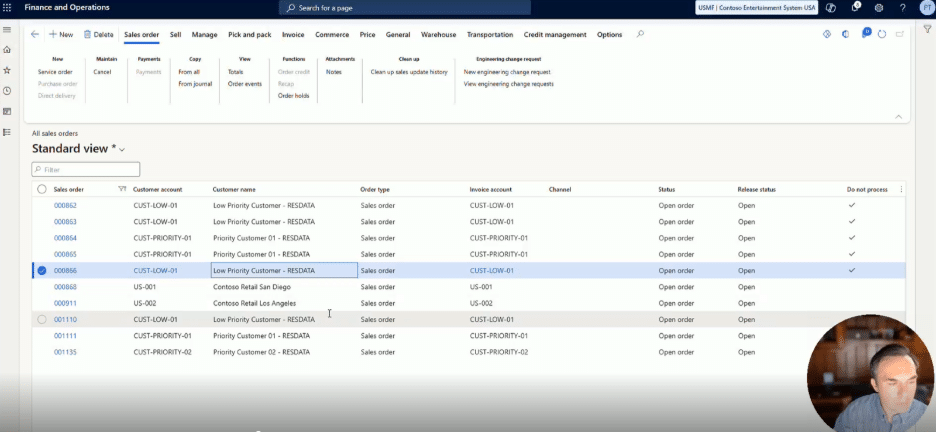
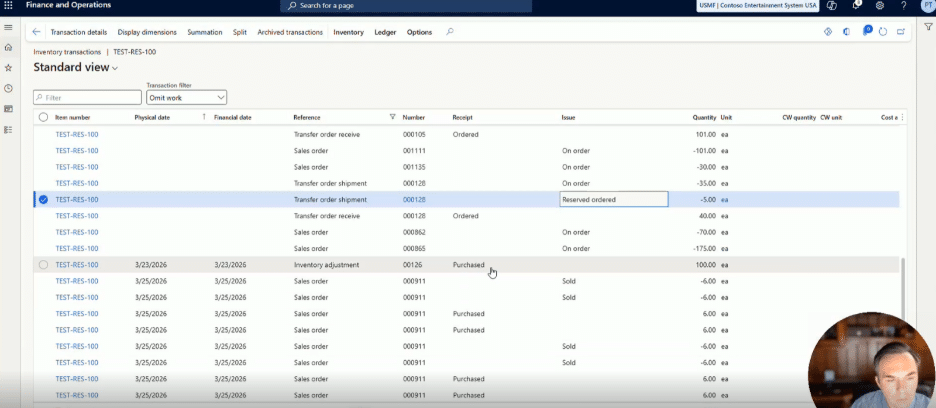
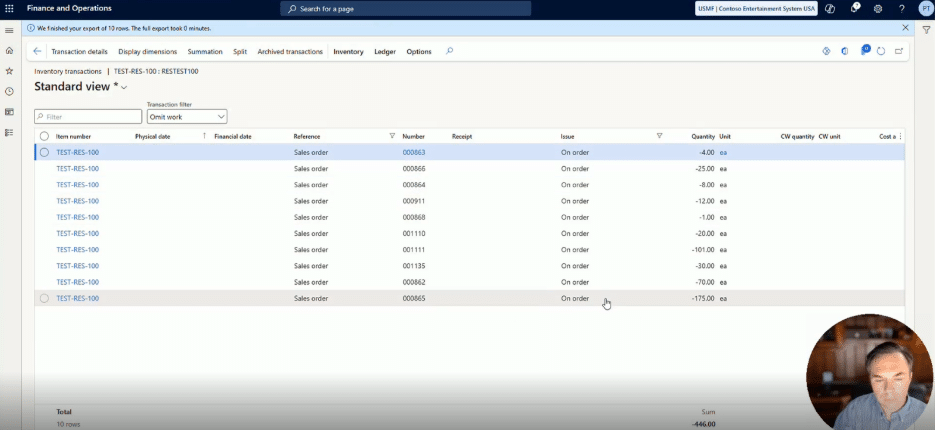
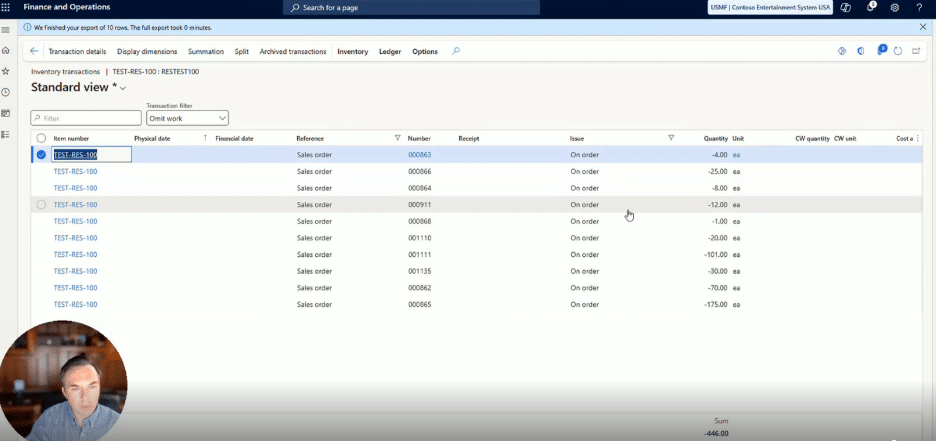
Without intervention—usually from a human—D365 allocation logic follows order of arrival. That is a reasonable default, but it becomes a problem when a tier-one customer places an order after inventory has already been reserved for smaller or lower-priority accounts.
The agent changes that. We designed it specifically for the friction points where competing priorities create allocation failures:
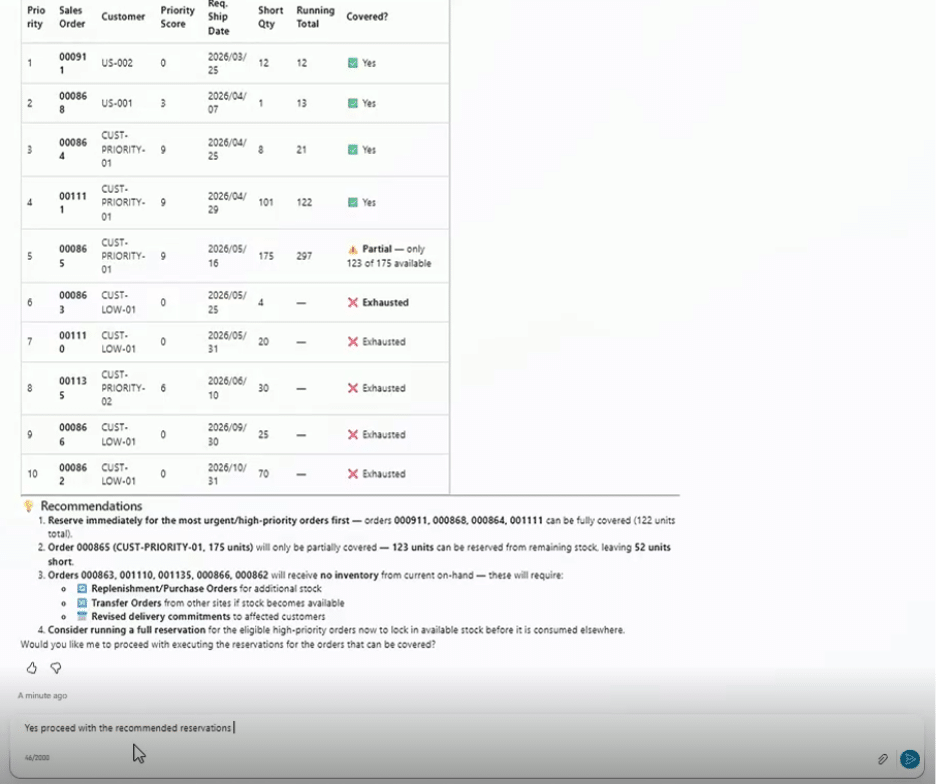
Customer priority conflicts — Reallocating inventory from lower-priority customers to higher-value accounts when demand from key relationships arrives late
Internal transfers vs. customer demand — Blocking inventory from moving between warehouses when it’s needed to fulfill a priority order
Reservation rebalancing — Continuously adjusting allocations across open orders as demand evolves
This is not a workaround. It is a purpose-built inventory allocation agent that extends the D365 environment and connects inventory directly to business rules governing customer value, order priority, service commitments, and operational risk.
How it Works
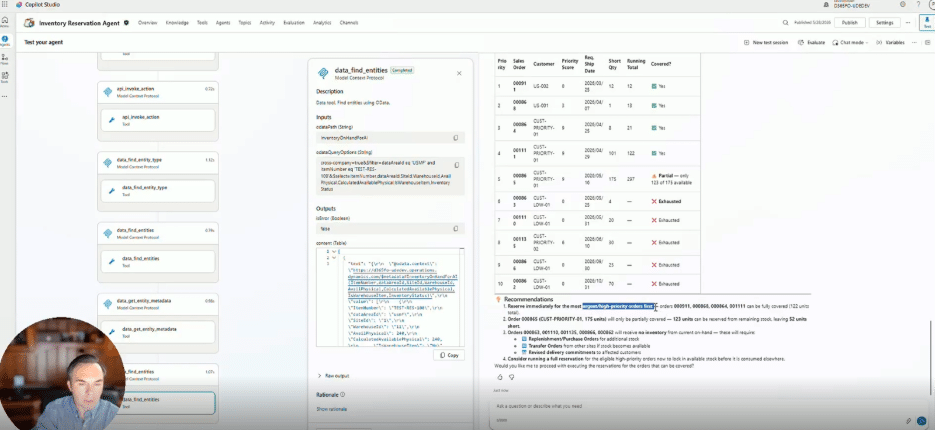
We designed the Inventory Reservation Agent to function as a digital overseer for the allocation queue. The agent monitors sales orders that are sent to it, watching for the conditions that would otherwise require a planner, customer service lead, or operations manager to step in.
Core capabilities:
Monitors open orders in real time and detects priority conflicts as they emerge
Automatically reallocates inventory to higher-priority customers without manual escalation
Intercepts internal warehouse transfers when reserved stock is needed to fulfill a priority order
Adjusts reservation strategies based on shifting demand signals
Logs and surfaces reallocation decisions for planner review—maintaining visibility without requiring manual action
The Tech Stack
The agent is built in Microsoft Copilot Studio and extended directly into Dynamics 365 Finance & Operations. That combination matters because agentic AI is only valuable when it can act inside the systems where work already happens.
Copilot Studio provides the workflow orchestration layer. It’s where you define the rules, triggers, and logic that govern when and how the agent acts.
D365 F&O provides the operational data foundation—inventory positions, order records, customer tiers, warehouse activity, and fulfillment commitments. The agent sits between the rules and the work, reading from the ERP, making decisions aligned with business priorities, and writing back updated reservations.
Measurable Impact
When inventory allocation optimization becomes continuous and agent-driven, the impact shows up in the places executives care about: protected revenue, stronger service levels, fewer manual escalations, and better use of planning talent. Here is what we see:
Increased revenue protection — High-value orders get fulfilled first, consistently, without relying on a planner to intervene. Your tier-one customers don’t get bumped because someone else ordered earlier.
Improved OTIF — On-time, in-full delivery rates improve for key accounts because the inventory allocation software is actively protecting those commitments, not just tracking them.
Reduced manual workload — Exception management shifts from a reactive, human-driven process to a system-driven one. Planners focus on decisions that require judgment, not status checks.
Faster response to demand changes — The agent reacts to new orders and shifting conditions in real time, without waiting for a review cycle or escalation.
Better customer satisfaction for key accounts — Priority customers get consistent fulfillment—the kind that builds durable relationships, not just one-time wins.
Final Thoughts
Inventory allocation is one of the fastest ways to demonstrate the business value of an agentic strategy because the use case is focused, the workflow is visible, and the results are measurable. You do not have to take on the entire supply chain on day one. You can start with one high-friction decision point and prove value quickly.
That is the broader lesson I want more leaders to take from supply chain AI: start narrow, solve something real, and scale deliberately.
One agent, one high-friction workflow, one clear outcome—then expand from there. That is not a limitation. It is how agentic strategies compound without overwhelming the business.
It’s also worth being direct about what this requires. The Inventory Reservation Agent isn’t an out-of-the-box configuration.
It requires specialized integration of Copilot Studio and Dynamics 365 SCM. In other words, this kind of inventory allocation agent demands both platform expertise and supply chain operational knowledge.
That is where a partner like Velosio makes the difference. We help organizations identify where AI agents will create the most immediate impact, build the operational and data foundations to support them, and scale agentic strategies beyond basic automation into measurable business advantage.
Frequently Asked Questions
What is an inventory allocation agent?
An inventory allocation agent is an AI-enabled workflow that monitors available supply, open orders, customer priorities, and business rules to recommend or apply reservation changes. Its purpose is to help the business decide which orders should receive limited inventory first when demand exceeds available stock.
How does an inventory allocation agent work in Dynamics 365 Supply Chain Management?
In Dynamics 365 Supply Chain Management, an inventory allocation agent can read order, inventory, customer, and warehouse data, compare that information against business rules, and surface recommended allocation actions. When the right controls are in place, it can also update reservations or route the decision to a planner for approval.
When should a company use an inventory allocation agent?
A company should consider an inventory allocation agent when limited supply regularly creates order conflicts, priority customers wait behind lower-priority orders, planners spend too much time researching exceptions, or customer service teams lack fast answers about order availability. The best starting point is a clear, recurring allocation problem with measurable business impact.
A company should consider an inventory allocation agent when limited supply regularly creates order conflicts, priority customers wait behind lower-priority orders, planners spend too much time researching exceptions, or customer service teams lack fast answers about order availability. The best starting point is a clear, recurring allocation problem with measurable business impact.
Does an inventory allocation agent replace planners?
No. An inventory allocation agent should reduce manual research and repetitive exception handling, not remove human judgment. Planners still play an important role when tradeoffs are complex, customer relationships are sensitive, or the business needs a human to approve a recommendation before inventory is reallocated.
What data does an inventory allocation agent need?
An inventory allocation agent needs reliable order data, available inventory, reservation status, customer priority rules, service commitments, vendor lead times, warehouse configuration, and item coverage policies. Without clean foundations, the agent may move faster, but it will not necessarily make better decisions.