Microsoft has officially announced that Project Online will retire on September 30, 2026. Sales to new customers ended on October 1, 2025. After the retirement date, the service will no longer be available, and organizations will no longer have access to the platform. For many businesses, this is not an immediate disruption. But it is…
If you run Dynamics NAV, SL, or GP, you’ve likely felt some pressure lately. Maybe it’s the aging server. Maybe it’s the growing list of manual workarounds. Maybe it’s the quiet fear that one more month‑end close might push your team over the edge. You’re not alone. And you’re not stuck. This guide walks through…
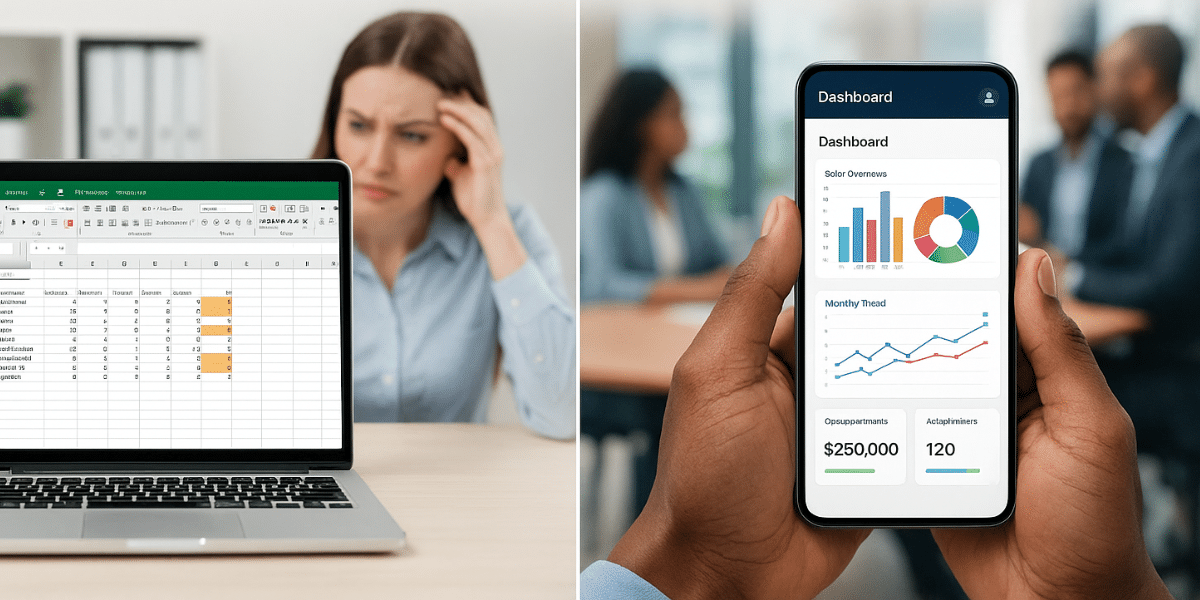
If you are a department manager, spreadsheets are likely both a lifeline and a source of frustration. They are flexible, familiar, and often the only way to track complex processes. But as soon as your spreadsheet grows in complexity, chaos can set in. Multiple versions, broken formulas, and painstaking manual updates can turn tasks that…
There’s a point in a growing business where success starts to feel a little wobbly. You add new locations. New product lines. New ways to serve customers. Revenue climbs. Your team steps up. Then month-end rolls around and you’re back to late nights, spreadsheet gymnastics, and “give us a few days” whenever someone asks a…
Modern applications change more than just workflows. They change how a business operates. By centralizing data, automating manual steps, and creating more consistent processes, companies gain the stability and visibility they need to make better decisions. And that translates directly into financial ROI. Before diving into these key areas, it’s helpful to understand what we’re…
If you’re a leader for an organization that still uses Dynamics AX, you’re at a crossroads. Your ERP system may still perform basic daily tasks, but it’s no longer built for the pace of modern business. With Microsoft ending all support for AX in January 2026, organizations are left balancing risk, cost, and innovation. The…
The biggest cybersecurity threats don’t always come from the outside. But sometimes, they also sit quietly in the server room. While your IT team is busy defending laptops, email, and cloud apps, the old on-premises Dynamics server powering your finances and operations may be wide open to attack. These legacy ERP systems, like Microsoft Dynamics…
If you manage technology for a growing organization, chances are you have at least a few spreadsheets that are far more critical than they should be. Maybe your finance team tracks billing in Excel, or operations uses a workbook that ties together orders, inventory, and shipping. You know the risk. Those spreadsheets were meant to…
Microsoft Dynamics can run smoothly on physical hardware, but that stability comes with hidden risks. The constant drain of hardware maintenance, exposure to on-premises cyber threats, and the limitations around scalability and upgrades all add up to a fragile foundation for such a critical system. That’s why more organizations are turning to Dynamics on Azure.…
The Spreadsheet Trap Excel is everywhere. For small and mid-sized businesses (SMBs), it often feels like the glue holding everything together. Need to track inventory? Someone builds a spreadsheet. Need a customer list? Spreadsheet. Project budgets? Timesheets? Reporting? You guessed it: another spreadsheet. The problem is that while Excel offers flexibility, it never serves as…