The Importance of Real-Time Supply Chain Visibility
Supply chain visibility is important because all organizations run on data. Having visibility means you understand costs, customers, and compliance.

Table of Contents
Modern supply chains are more complex and dynamic than ever — spanning continents, systems, and partners.
Yet many organizations still can’t see what’s happening across their networks in real time. Data lives in silos. Communication lags behind reality. Teams react, instead of anticipating.
That’s a big problem.
Whatever hopes and dreams you might have for your supply chain — increasing efficiency, cutting costs, keeping better track of physical assets, responding to disruptions faster. All of those things start with visibility.
After all, you can’t plan for what you can’t see. You can’t improve what you can’t measure.
In this article, we explain what supply chain visibility (SCV) means today and discuss its critical role in driving resilience, agility, and success.
Supply chain visibility is the ability to access accurate, real-time, and actionable data from every part of your supply network.
It helps you anticipate change before it happens, make informed decisions, and act quickly.
Traditionally, SCV referred to tracking materials and products from their origin to their destination.
Today, it’s both broader and more specific: visibility is transparency plus context. You aren’t just seeing into the supply chain—you understand how every event, variable, and dependency affects outcomes, in real time.
When teams have end-to-end visibility, they can predict demand shifts, prevent delays, and make proactive decisions instead of reacting after the fact. They respond more quickly to disruptions and changing customer expectations, and experience fewer inefficiencies, delays, and costs.
Supply chain visibility is important because all supply chain operations run on data.
Modern supply chains generate vast volumes of data across sourcing, production, logistics, and fulfillment.
Without a connected view of that information, your teams end up reacting to problems instead of preventing them.
Recent insights from IBM, Sensos, SAP, and ASCM all point to the same reality: visibility is now a strategic differentiator.
Real-time insight helps organizations spot risks earlier, align supply with demand, and adapt to change. It also provides teams with the context they need to respond faster and make smarter, data-driven decisions.
Beyond risk prevention, visibility drives better performance across the board.
It helps break down silos, streamline workflows, and improve collaboration between partners and internal teams. It’s also a competitive advantage. Companies with clear, accurate data can maintain reliability under pressure, keep costs down, and meet customer expectations.
In short, visibility transforms supply chains from reactive to proactive.
When you can see what’s happening across your network — and understand what it means — you’re better able to respond to disruptions and capitalize on new opportunities.
Visibility technically supports all supply chain operations and strategies. But the ultimate aim, of course, is driving outcomes.
That said, here’s a look at some of the broader benefits visibility provides, along with examples to help put them into context.
From weather events and global conflicts to supplier issues, cyberattacks, and demand shocks, disruption is inevitable.
With real-time visibility, you can see the stress points building across your network, long before they hit your chain.
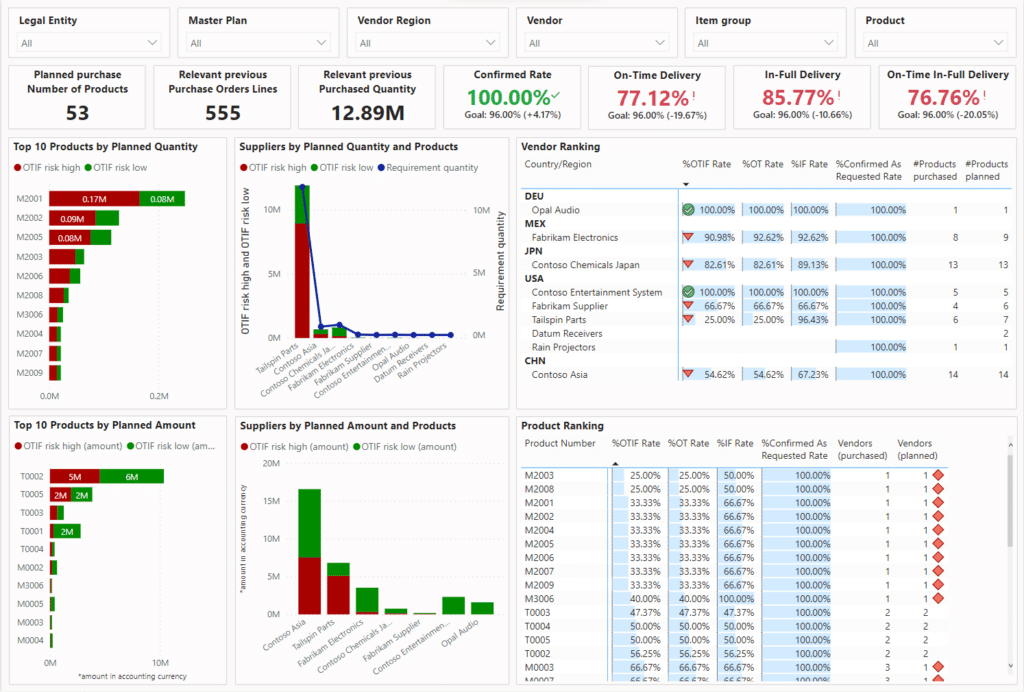
D365 includes a supply risk assessment workspace where you can combine data across the entire ecosystem – including supply, demand, inventory, production, carrier performance, and constraints, among others.
In it, you can analyze supplier performance and risk from multiple angles via embedded Power BI reports. For example, you can use supplier performance histories, OTIF trends, and geography to preempt bottlenecks.
You can also run scenario simulations to quantify risk (e.g., alternative routes, multi-sourcing, pre-build inventory), then use the findings to create contingency plans before crises occur.
Operational efficiency depends on your ability to see what’s slowing you down and, more importantly, take action.
SCV provides leaders with a comprehensive view of processes, from production to delivery, enabling them to identify and address inefficiencies.
Production & Quality. Enhance production visibility by integrating external manufacturing execution systems (MES) with your core platform. Eliminating data silos enables you to identify and implement quality improvements, as well as optimize production workflows.
Asset Performance. You can also can use data from sensor-enabled assets to improve overall equipment effectiveness (OEE). Built-in AI tools can detect anomalies, identify the root cause, and quickly find the right solution. Over time, you can adopt a more proactive approach to maintenance, resulting in improved OEE, reduced downtime, and faster service equipment.
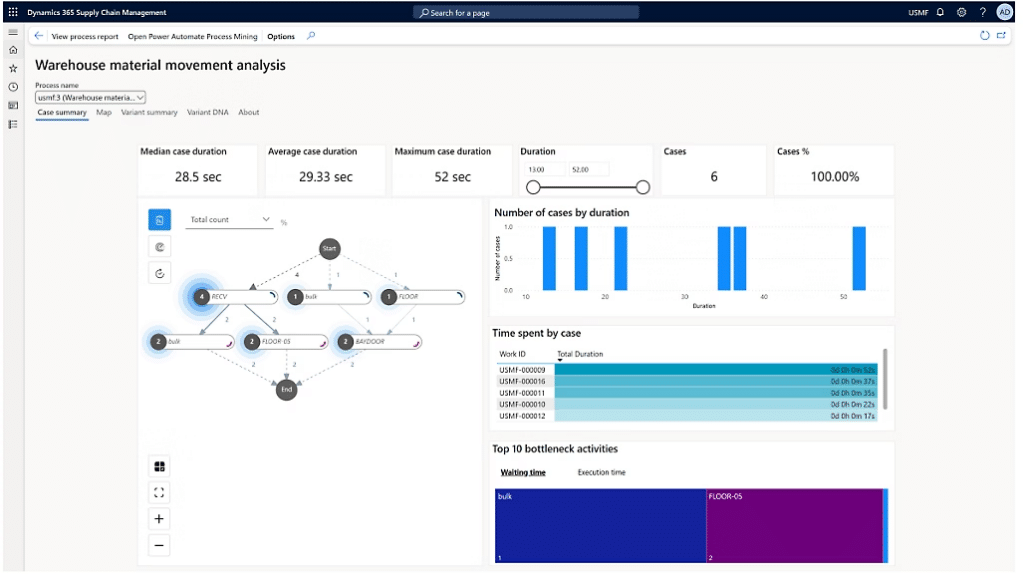
Warehousing. Utilize process mining and real-time task visibility to rebalance labor, minimize touches, and reduce cycle times.
Transportation: Monitor lane-level performance to optimize mode/carrier mix and reduce detention and dwell.
Customers expect transparency: accurate ETAs, proactive communication, and simple self-service.
Visibility provides the insights needed to deliver better experiences, which, in turn, builds trust and loyalty among customers.
Connecting systems across sales, logistics, and customer service enables you to align supply chain operations with consumer expectations.
For example, connecting order, inventory, and carrier data means customer service reps work from the same data as their counterparts in the warehouse or in the delivery truck.
You can also optimize fulfillment using real-time stock by location, promised dates, and routing options.
For complex omnichannel needs, the D365 Intelligent Order Management add-in can orchestrate flows so each order takes the most reliable, cost-effective path.
Create new product or service offerings. Dynamics 365 can help manufacturers transition to a product-as-a-service (PaaS) model by combining the ERP with AI, automation, IoT, and flexible financial frameworks.
D365 SCM and Azure IoT unlock real-time monitoring of product performance. Enhanced visibility enables predictive maintenance, which reduces downtime, while streamlined logistics ensure that spare parts are delivered on time.
Integration between finance and operations ensures that every decision, action, and process improvement is optimized for efficiency, speed, and profitability.
You can’t manage landed cost, working capital, or service cost without granular visibility.
End-to-end visibility empowers you to understand precisely where your money is going. You can then use that knowledge to make smarter spending decisions — with broader strategic goals in mind.
A few examples:
In a recent survey exploring the use cases and economic impact of Dynamics 365 within the manufacturing sector, participants reported that unifying disparate systems and data silos in the ERP gave them the visibility they needed to streamline inventory management processes.
First, they automated simple inventory tasks, which unlocked minor cost optimization and efficiency benefits. Inventory data was later used to drive process improvements that, ultimately, led to bigger gains.
Sustainability is a competitive differentiator, not just a report.
Supply chain visibility provides the data foundation needed to track, measure, and improve environmental performance.
D365 Supply Chain Management, Fabric, and Sustainability Manager can bring ESG data into your core platform, allowing you to link them directly with operational metrics.
This makes it easier to measure progress against sustainability goals, meet regulatory requirements, and prove accountability to investors and customers alike. For example, you can:
Blind spots invite trouble—security incidents, quality issues, and regulatory violations.
When you can’t see what’s happening in your supply chain, you can’t identify potential cyber threats, compliance violations, or unexpected disruptions. That, in turn, means you can’t take action to prevent or fix the problem.
Visibility is key when it comes to protecting your apps, data, and all the assets – digital and physical – connected to your ecosystem. It allows you to create an early warning system, where AI and automation can flag anomalies, such as cyberattacks, delivery delays, and sensor failures, before they have the opportunity to cause harm.
You can use real-time telemetry and anomaly detection to identify sensor failures, tampering, or quality issues. You can also tighten identity and access controls; monitor admin paths and privileged activity across the supply chain tech stack.
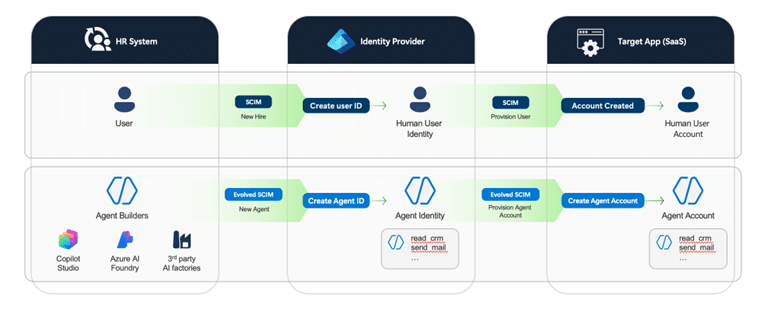
For example, Microsoft Entra enables you to manage all accounts and identities across your ecosystem in one place. And, they’ve just rolled out those protections for AI agents.
Additionally, you can trace materials and processes for audits, including temperature and chain of custody data.
This is especially important for companies operating in sectors with strict traceability requirements like pharmaceutical companies, medical device manufacturers, growers, or food distributors.
You can’t build an intelligent, resilient supply chain without visibility. Visibility is the foundation for every digital transformation initiative. It’s the difference between reacting to change and driving it.
As supply chains become increasingly connected and data-driven, visibility becomes even more crucial for securing a competitive edge.
When companies can see, understand, and act on disruptive events and new opportunities in real time, they’ll be better positioned to win.
Velosio helps operations leaders modernize supply chains, accelerate transformation, and drive measurable results. Contact us today to learn more about our supply chain practice, solutions, and services.
Talk to us about how Velosio can help you realize business value faster with end-to-end solutions and cloud services.