Penn State’s Materials Research Institute (MRI) Powers Materials Innovation with the Right-sized CRM
Power CRM helps the Materials Research Institute manage thousands of relationships across campus and industry

Table of Content
Penn State’s Materials Research Institute (MRI) is a leading center for materials science innovation, bringing together researchers from across the university and partnering with industry to advance the development of metals, ceramics, polymers, composites, and next-generation electronics. MRI operates world-class core facilities, supports collaborative research, and serves a diverse network of sponsors, faculty, students, and industry partners. By providing access to advanced instrumentation and expert staff, MRI helps solve real-world challenges, from improving smartphone glass to enhancing biomedical devices, making it a driving force behind everyday technological progress.
MRI needed a better way to manage relationships with thousands of industry partners, sponsors, faculty, and visitors. Storing information across spreadsheets, listservs, Mailchimp, and Outlook made it hard to keep data clean. Teams struggled to keep records updated, coordinate outreach, and get a complete picture of their contacts and how they were engaging. Their initial Microsoft Dynamics 365 deployment added structure, but it was more complex than a fifty-user institute truly needed.
MRI partnered with Velosio to right-size its CRM approach with Power-CRM, a lighter solution built on Microsoft Power Apps and Dataverse. Power-CRM now underpins marketing, customer service, agreement and sample tracking, and internal “people and space” management, all within the Microsoft ecosystem.
Power-CRM and Velosio give Penn State’s MRI a simpler, more connected way to manage its complex network of relationships.
Stronger materials, stronger connections
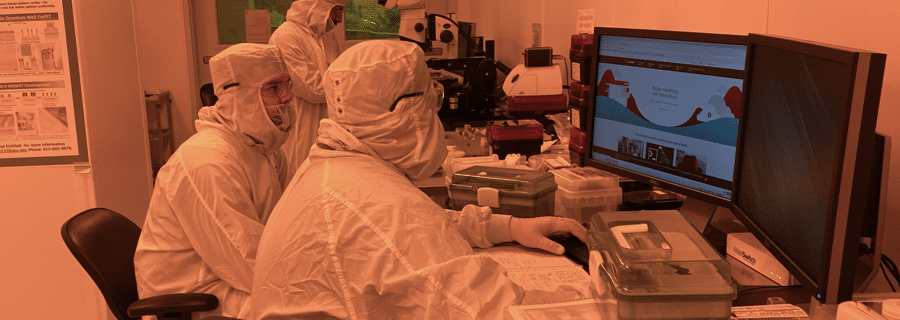
Everything is made from something. At Penn State’s Materials Research Institute (MRI), that “something” is metals, ceramics, polymers, composites, and next-generation electronics. MRI brings together researchers from across the university, runs world-class core facilities, and partners with companies that shape everything from smartphone glass to batteries to biomedical devices. It’s the quiet engine behind a lot of everyday innovation.
This kind of impact depends on strong relationships. MRI needs to stay in close touch with sponsors, industry partners, faculty, alums, prospective collaborators, and internal stakeholders. It has to track thousands of people, projects, events, and conversations over time – and make it easy for a lean team to turn all that activity into thoughtful outreach.
To keep that web of relationships organized and usable, MRI turned to Power-CRM, with Velosio as its long-term partner.
MRI’s model is unusual, even inside a large university. Its facilities give outside companies and internal researchers access to advanced instrumentation and staff expertise.
“On any given day we might have a snowboard company trying to understand why boards are cracking, or a glass manufacturer characterizing a new surface treatment,” says Bob Cornwall, Managing Director of MRI. “Companies come to us when they need to understand what’s happening inside their materials and how to make them better.”
The institute also coordinates large, multi-year sponsored programs, hosts events like Materials Day, runs regular seminars, and publishes newsletters. The “customers” of that work include corporate research and development teams, federal agencies, faculty across five colleges, graduate students, post-docs, and industry visitors who may come and go over many years.
For a long time, most of the relationship data behind that activity lived in spreadsheets, listservs, and a basic email platform. As the audience grew to thousands, the cracks started to show. Every campaign meant exporting and cleaning lists, checking outdated contacts, uploading files, and hoping nothing important fell through the gaps. Different teams struggled to see a complete picture of who MRI knew, how they were engaging, or where opportunities were emerging.
“We’d grown to the point where spreadsheets and listservs just weren’t cutting it anymore,” Bob recalls. “We needed a real system on the Microsoft platform the university already trusted, but we didn’t want to feel like we were running a big enterprise sales organization.”
MRI first implemented Dynamics 365 with help from Strava, a specialized CRM partner who are now part of Velosio. Dynamics 365 brought structure and visibility, but over time, it felt heavier than what a roughly fifty-user deployment inside a single institute really needed. There was more configuration, more complexity, and more capability than MRI would ever use.
As Managing Director Bob Cornwall put it, they needed the power and integration of Microsoft, “without feeling like we were running an enterprise sales organization.”
When the Strava team, now part of Velosio, introduced Power-CRM, MRI saw a better fit. Power CRM is built on Microsoft Power Apps and Dataverse, with familiar Dynamics 365 underpinnings, but it’s designed to be simpler to use and quicker to implement. For MRI, that meant they could keep the strengths of their original approach – data ownership, Microsoft ecosystem, a partner who understood their world, while trimming away the complexity they didn’t need.
“Power CRM gave us the pieces of Dynamics 365 we actually used, without all the extra weight,” Bob says. “It’s a much better fit. We kept the integration and the data ownership and lost a lot of the overhead.”
The move checked several important boxes. Functionally, Power CRM easily covered MRI’s core needs around contact management, marketing, case tracking, agreement and sample workflows, and internal operations. The interface felt cleaner and more approachable to users who would never think of themselves as “CRM people.” The deployment was fast and predictable because Velosio already knew MRI’s environment and data. Total cost was significantly lower than a comparable Dynamics 365 footprint, which matters when you’re working inside a university budget.
MRI initially focused Power CRM on marketing and outreach. Once that foundation was solid, they expanded the platform to the Customer Service team, more than doubling the number of active users and turning Power CRM into a shared system for multiple groups.
For Marketing Director Jennifer McCann, the impact of that shift is very tangible.
Instead of juggling multiple spreadsheets and manually uploading lists for each new campaign, she now works from a single, living view of MRI’s audience inside Power-CRM.
“It sounds simple, but having everything in one place is huge,” Jennifer says. “Faculty, corporate contacts, event attendees, alumni — I’m not chasing them across spreadsheets anymore. I can pull the list I need in a couple of clicks.”
She estimates she spends about half as much time as she used to on list preparation. That reclaimed time goes straight into higher-value work: planning campaigns, experimenting with new segments, and running more frequent, more targeted outreach.
An integrated marketing toolset adds another layer of efficiency. ClickDimensions, connected to Power CRM, lets Jennifer schedule social posts across channels in one sitting. What used to require daily manual effort now takes an hour to line up content for the next two weeks.
Because everything runs in the Microsoft cloud, MRI’s internal developers can connect Power CRM to other systems using tools they already know. Power Automate and Power BI help pull data from SQL, Microsoft Forms, and university systems, while reporting dashboards provide leadership with a clearer view of subscriber growth, event engagement, and industry participation. The net effect is straightforward: MRI’s marketing can. Now keep pace with the scale and ambition of its research.
Once MRI saw how well Power CRM supported outreach, it was natural to extend it to other parts of the organization.
The Customer Service team adopted Power CRM to manage incoming inquiries and support requests, replacing a standalone Zendesk instance. Cases now flow through a single system with consistent workflows, shared visibility, and an easier path to reporting. Staff can see who is reaching out, what they’re asking, and how those interactions connect back to projects, facilities, and sponsors.
The institute also uses Power CRM to track the lifecycle of sponsor agreements and the work performed under them. Instead of scattering that information across email threads and ad hoc documents, they can follow an agreement from initial conversation through completed work, results delivered, and follow-on opportunities.
On the internal side, Power CRM fills a gap that the university’s HR systems don’t fully address. MRI operates with a mix of full-time staff, students, post-docs, visiting researchers, and industry guests. Tracking who sits where, what type of appointment they hold, and how long they’ve been associated with the institute matters for space planning, communications, and program management. Power CRM gives them a central place to keep that picture up to date.
Because Power CRM runs in the Microsoft cloud, the institute can tap into Copilot right inside the tools they already rely on.
On the technical side, MRI’s developers view Copilot as a primary tool when setting up new automations or troubleshooting problems. It helps them work more quickly while remaining within the platform’s guardrails.
For an organization that lives on the frontier of materials science, it’s fitting that the business side of the house is experimenting with new tools too – in a way that feels grounded and practical.
MRI’s relationship with Velosio goes back more than a decade. Over those years, the institute has moved from spreadsheets and listservs to a modern CRM foundation, adjusted course from full Dynamics 365 to a right-sized Power-CRM approach, and expanded CRM from a marketing tool into a multi-team platform that supports outreach, service, and internal operations.
“What’s made this work so well is that the team has stuck with us,” Bob says. “They listened when we just needed a bare-bones CRM, and they’ve helped us grow it into something a lot more sophisticated yet still simple to use.”
Penn State’s Materials Research Institute shows how a well-designed, appropriately scaled CRM – backed by a skilled, responsive partner – can support a complex, high-impact organization inside a much larger enterprise. Today, Power-CRM is simply part of how MRI connects talented people and advanced facilities with the partners who need them most.
Ready to see what Power-CRM can do for your organization?
Schedule a call with our CRM experts | Watch Power-CRM in Action
Talk to us about how Velosio can help you realize business value faster with end-to-end solutions and cloud services.