Reducing organizational friction to facilitate change is the mandatory first step for any executive team looking to modernize its operations. Organizational change fails not because leaders choose the wrong technology, but because teams are simply too overwhelmed by daily friction to execute a new vision. You cannot ask a burned-out workforce to innovate. When a…
LEARN MORE
In today’s economy, the traditional “enterprise advantage” has effectively inverted. For decades, global giants dominated through sheer mass: more people, massive budgets, and expansive physical footprints. But in an era defined by agentic automation and the need for extreme decision velocity, those same assets have become anchors. Today’s enterprise giants are often slow, bureaucratic, and…
LEARN MORE
For years, leaders have been told they must either migrate their ERP immediately or risk falling behind. That message has produced more anxiety than action. It’s created a false sense of urgency on timing while ignoring the deeper issue: the silent drain of technical debt on operational capacity. Today, the real question isn’t “Should we migrate now?” It’s “How long can we afford to keep paying the…
LEARN MORE
The Most Expensive Work in Your Company Is the Work No One Measures. Without a strategy for robotic process automation, many executives believe their operations are secure simply because the business continues to function. However, manual touches do not appear on financial statements. They erode your gross margins every single day. Relying on manual intervention poses the greatest…
LEARN MORE
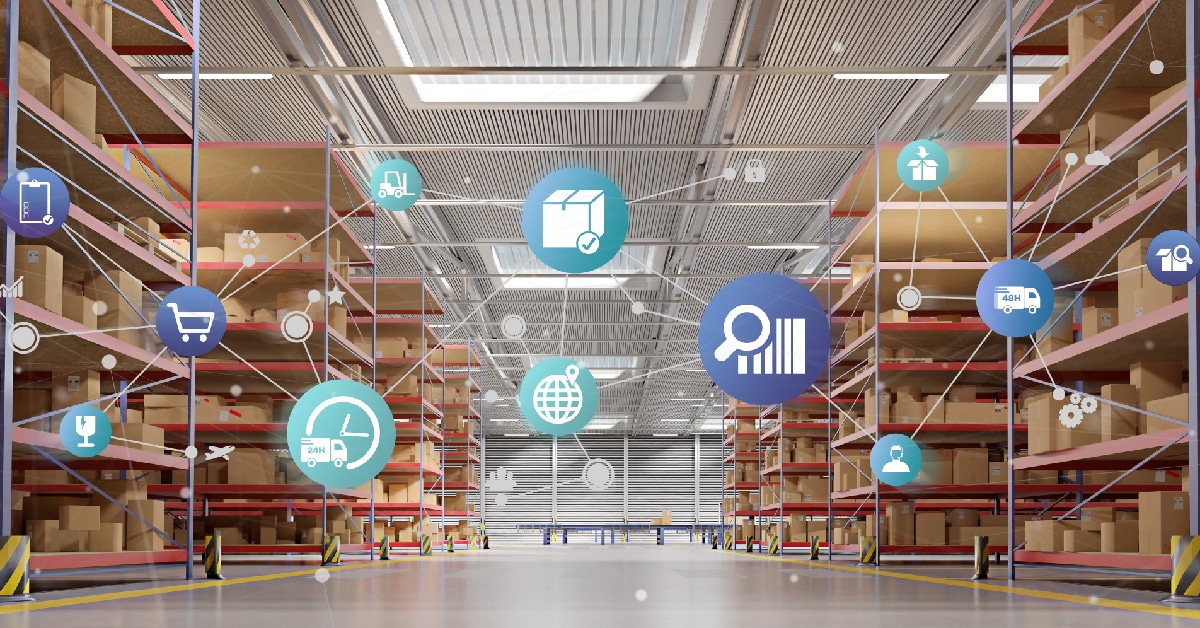
Climate disasters. Cybercrime. Inflation. Labor shortages. Whatever’s going on right now, geopolitically speaking. Disruptions are no longer rare “black swan” events. They’re business as usual. All of it converges in the supply chain. Constant challenges, growing complexity, and data overload make it nearly impossible for humans to manage operations manually. Automation isn’t a futuristic advantage…
LEARN MORE
In the C-suite, the productivity definition is often reduced to a simple ratio: output versus input. But as a company scales, business productivity frequently hits a wall. You’ve invested in the best manufacturing tools and equipment and partnered with top-tier machine tool manufacturers, yet execution feels sluggish. The natural reflex is to hunt for workplace productivity tips or push…
LEARN MORE
The Most Expensive Work Your Company Does Is the Work You Can’t See For enterprise and mid-market leaders, the greatest threat to profitability in 2026 is no longer external market volatility. It is the internal, structural fragility caused by manual workarounds. When executive teams review financial performance, they often search for margin erosion in business within supply…
LEARN MORE
Ransomware losses are rising faster than insurance coverage limits. At the same time, insurers and auditors are scrutinizing legacy ERP systems in ways most boards have not fully considered. What was once viewed as aging infrastructure is now a measurable governance risk. A legacy ERP system is no longer just old software. It represents insurability exposure, audit…
LEARN MORE
Today’s supply chains face constant volatility from demand swings, capacity constraints, geopolitical risks, and complex partner networks. The biggest challenge isn’t a lack of data. It’s about being able to respond quickly when conditions change. Most organizations already automate standard supply chain tasks. Reorder alerts, invoice matching, compliance checks, and so on. These workflows reduce…
LEARN MORE
Supply chains face compounding volatility. Extreme weather, policy shifts, cyber threats, capacity constraints, and supplier instability don’t arrive one at a time—they stack, interact, and escalate quickly. Leaders aren’t asking whether disruption will happen, but when, where, and how much it will cost in service levels and margin. Traditional risk management can’t keep up. Static…
LEARN MORE